
When Migration Turns Malicious: A Case Study in AI Crawlers and Hidden Backdoors

The Midnight Alarm
Shortly after we moved a client's website to a new server, I received an urgent alert from the hosting provider. The website's "brain" (the CPU) was completely overloaded, reaching 100% capacity. To prevent the entire server from crashing, the provider had to shut the website down immediately. The site was offline, and the client was losing potential business.
The First Guess: AI "Robots"
At first, the problem seemed simple. Our data showed a massive flood of traffic from countries like the US and France. It appeared that "AI crawlers"—automated programs that scan the internet for data—were visiting the site so aggressively that they crashed the server. We quickly updated the site’s "entry rules" (the robots.txt file) to tell these bots to stay away. Everything seemed to return to normal.
The Hidden Trap
Exactly 24 hours later, it happened again. The site went down with the same error. I realized this wasn't just a coincidence; it was a deliberate attack.
Expert Insights
Join 1,000+ business owners getting actionable web & marketing insights every month.
No spam, unsubscribe anytime.Privacy Policy
After a deeper investigation, I discovered two alarming things:
The 404 Attack: The attackers weren't just looking at the site. They were forcing the server to look for thousands of pages that didn't exist (creating "404 Errors"). Each time the server tried to find these fake pages, it used up a huge amount of energy, eventually causing it to freeze.
The Secret Backdoor: I found a "backdoor"—a hidden piece of malicious code—inside the website. This allowed the attacker to control the site from the inside and "invite" those aggressive bots to attack at specific times.
The Solution: A Digital Shield
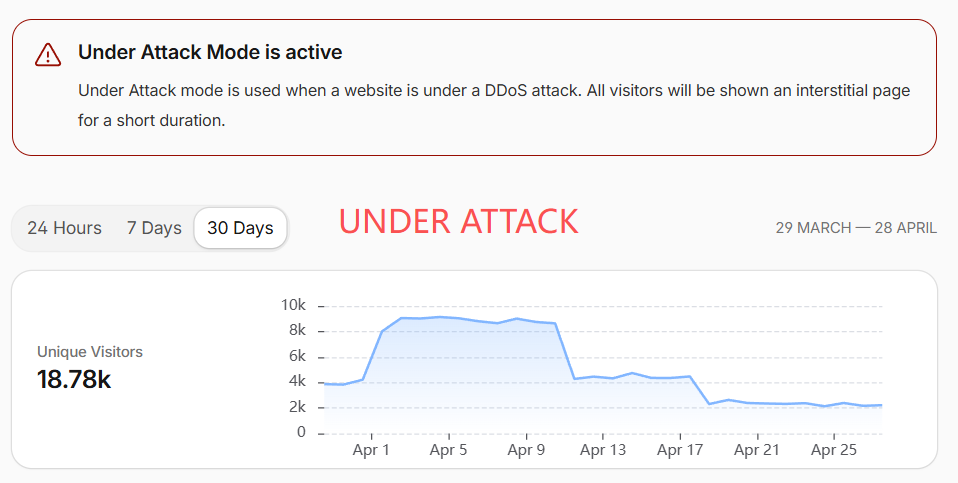
To fix this, we didn't just clean up the code. We installed a Web Application Firewall (WAF) through a service called Cloudflare. Think of this as a security guard standing in front of the website’s door. Now, before any visitor or bot reaches the server, the guard checks their ID. If they look suspicious, they are blocked instantly.
Since activating this "shield," the website has been running perfectly, and the server usage remains very low.
Conclusion: Why a "Website Care Plan" is Essential
Many business owners think that once a website is built, the work is done. This case study proves the opposite. A website needs constant attention, just like a car needs regular servicing.
A professional Website Care Plan is no longer optional because it provides:
- Regular Security Scans: To find and remove "backdoors" before they are used.
- Proactive Firewall Management: To block malicious traffic before it crashes your site.
- Software Updates: To close the gaps that hackers use to get in.
In the digital world, being "online" isn't enough. You need to be protected. Without a maintenance plan, you aren't just running a website—you are waiting for the next attack to happen.
Some assets in this article are Designed by Freepik.